
Muskego Directory Collections by Year
The Huelsman Family Research Center holds the broadest documented county shelf for Muskego research. Its holdings do not establish a complete Muskego city directory run. They do supply county histories, directories, telephone books, censuses, maps, land files, and name indexes that bridge gaps. Exact availability should be confirmed before travel because many items require staff help or an on-site visit.
| Collection | Years | Where Held | Access |
|---|---|---|---|
| Waukesha City directories | 1858 and 1890 to present | Huelsman Family Research Center | Ask the archive; regional context only |
| County farm and village directories | Selected years | Huelsman Family Research Center | In-person research |
| Muskego telephone books | 1975-1976, 1981, 1985, 1989-1990, 1993-1994 | Milwaukee Public Library shelf list | Confirm with holding library |
| Milwaukee suburban criss-cross run | 1972-1995 | Regional library collection | Fallback, not proof of Muskego coverage |
| Muskego local-history files | Dates vary | Public library and historical society | Catalog, inquiry, or visit |
No verified digitized Muskego city directory appeared in the official catalogs reviewed. A county or suburban title may contain a Muskego entry, but its title alone does not prove coverage. Ask for the exact place, year, and format. Save the title page and publication date with any result.
Muskego Library Directory Research
The CAFÉ catalog supports keyword, browse, phrase, exact, advanced, and Boolean searches. Those modes work well for a surname, yearbook, road, resort, school, or local subject file. Muskego Public Library is at S73W16663 W. Janesville Road and can be reached at 262-971-2100. Published hours are Monday through Thursday, 9 a.m. to 8:30 p.m., and Friday through Saturday, 9 a.m. to 5 p.m.; Sunday is closed.
Ask staff about local-history files, newspapers, yearbooks, building files, and clippings, not for a list of patrons. Library use records are confidential. The strongest request includes a surname, place term, and date range. A road name or lake can be as useful as a person’s name.
The Muskego Public Library catalog screen shows the choices available before a visit.
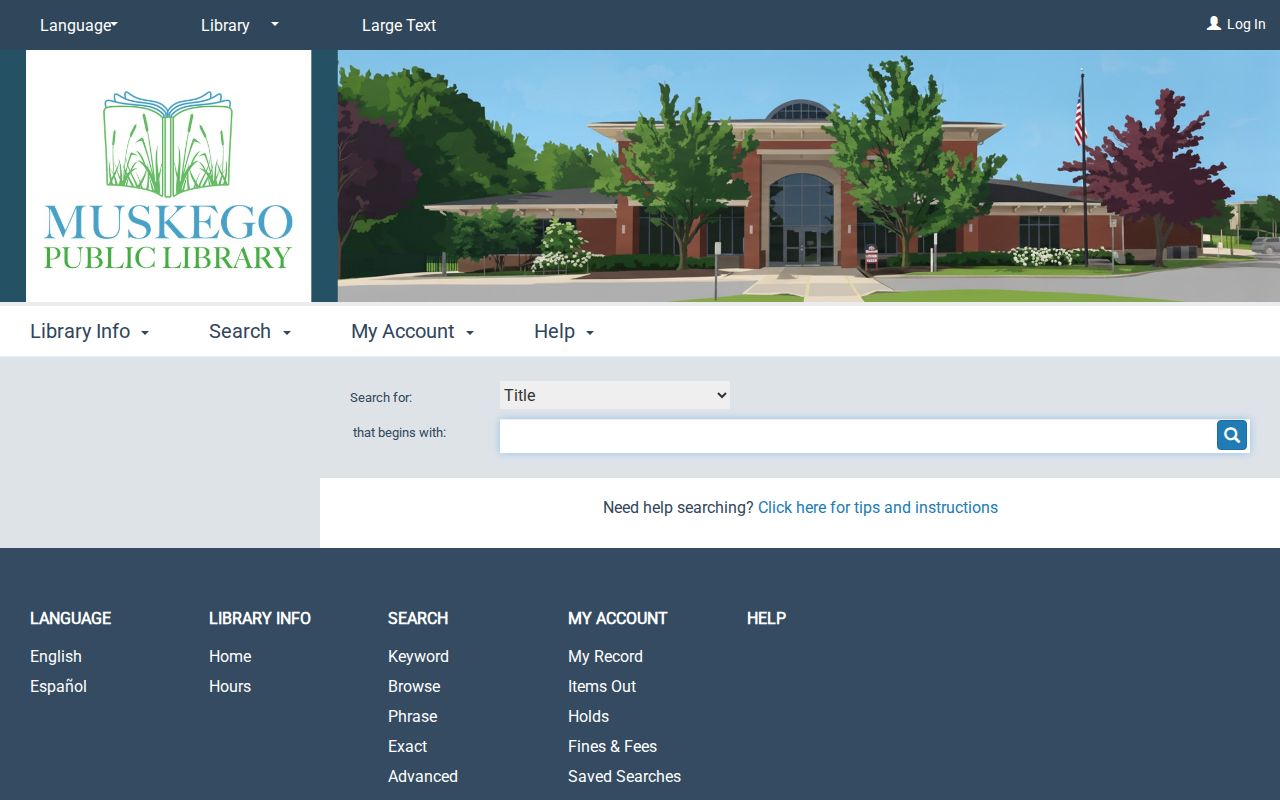
Use those controls to find a title or subject heading, then ask whether the item is on a shelf, in a local file, or available through another library.
Read Muskego Directory Entries Carefully
A city directory entry is a dated association, not a present-day profile. The Library of Congress directory guide says entries may be arranged by name, street, or telephone number and may list a spouse, occupation, employer, and address. Details vary by year and compiler. Photograph the title page and abbreviation key with the entry so later readers can interpret it.
| Name | The indexed person, sometimes with a spouse in parentheses |
|---|---|
| Work line | An occupation or business connection when collected |
| Address | The form used that year, which may differ from today’s grid address |
| Telephone | A listed number in telephone or later combined volumes |
| Marks | Publisher-specific abbreviations explained by that volume’s key |
- Criss-cross directory
- A directory sorted by street address or telephone number instead of surname.
- Householder index
- An address-led list naming the person the publisher linked to a household.
- Abbreviation key
- The publisher’s explanation of shortened words and symbols, often near the front.
The Library of Congress collection screen explains city, street, telephone, and criss-cross formats.
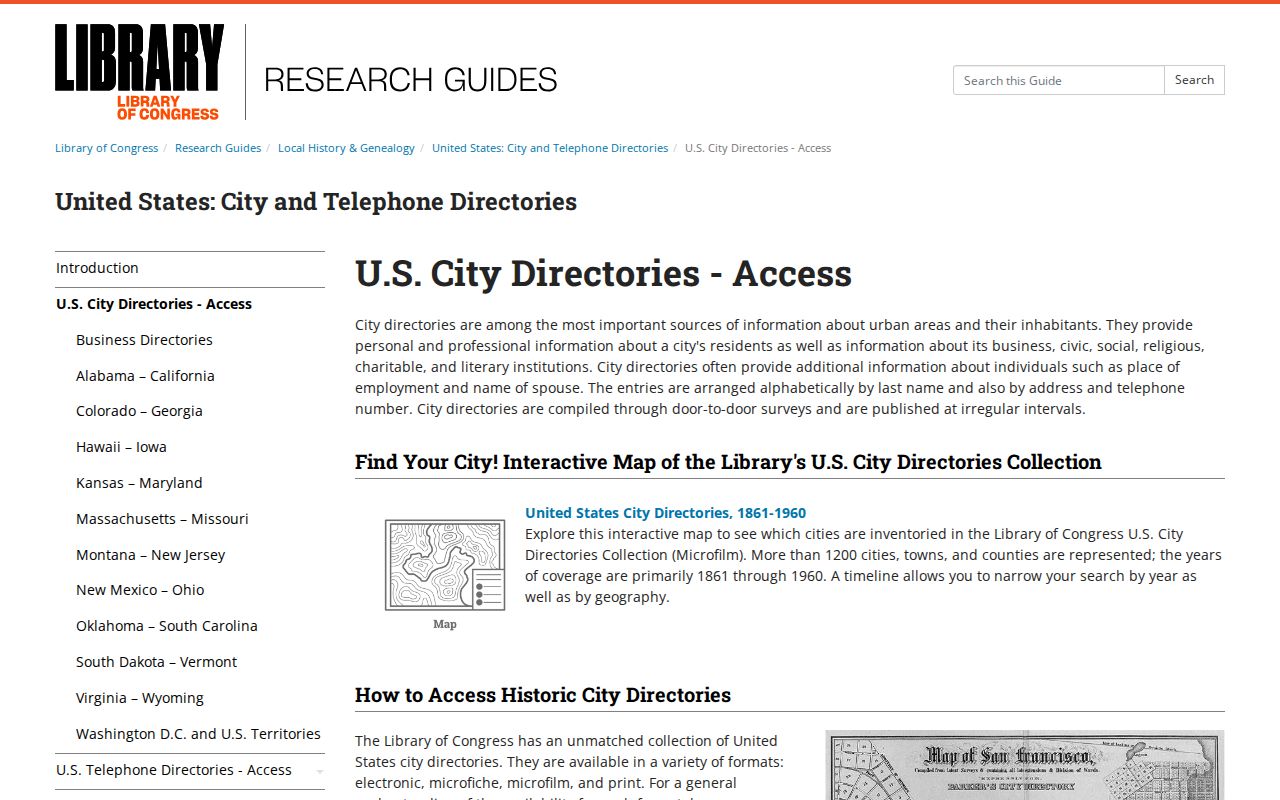
It is a planning tool, not a Muskego name index. Researchers must specify locality, exact years, and directory type, and the library does not conduct name searches for them.
Muskego Names Beyond Directories
Directory gaps can be filled with dated sources from the county archive. Name-indexed county histories cover 1880, 1894, 1907, and 1984. Cemetery transcriptions begin in the 1840s. Marriage resources include indexes and notices spanning parts of 1846 through 1955, while obituaries run from 1859 forward. Each collection answers a different question.
Population records add household context. The research center identifies territorial censuses for 1838, 1840, 1842, and 1846; Wisconsin state censuses from 1855 through 1895; and incomplete federal census sets from 1850 through 1870 by township. Naturalization records cover portions of 1847 through 1955. School, military, organizational, and land files can place a person in Muskego when city directories cannot.
Marriage sources can tighten the date range. The center lists an 1846-1907 county index, an 1846-1866 Waukesha marriage index, newspaper marriages from 1859-1881, applications from 1899-1935, and wedding announcements from 1935-1955. These are research leads, not certified copies. Birth material includes courthouse transcripts from 1846-1879, incomplete copies for later periods, and annual announcement books beginning in 1973. The Register of Deeds remains the certificate custodian when an official copy is required.
Muskego Records Changed With Government
The form of the place determines where its directory traces survive. Older residents may appear under a township, county, lake, church, rural route, or road name rather than the modern city. This chronology helps frame archive requests.
| Year | Record context |
|---|---|
| 1838 | The town era began, with local and territorial sources taking priority. |
| 1846 | Waukesha County formed, shaping later county custody. |
| 1921 | Old Muskego Town Hall opened after meetings in homes, schools, and saloons. |
| 1964 | Muskego incorporated as a city on November 9. |
| 1982 | The uniform directional address system was added. |
Old Town Hall served as interim City Hall from 1964 through 1972. That bridge between town and city government helps explain why civic records are split among municipal, county, library, and historical society holdings.
Muskego’s growth also changed the words used in records. Two northwest annexations helped prompt incorporation, and the population more than doubled during the 1950s. The arrival of I-43 in the 1960s added another layer of suburban change. A search limited to the modern city name can miss a person described by an older town, lake, road, or county term.
Trace Family Lines in Muskego
Build a family trail from several dated records. A Muskego city directory or telephone book supplies one snapshot, while a census may group a household and an obituary may connect relatives. Preserve spelling variants. Naturalization files can help when surnames change across indexes.
- Start with the closest known year and copy the entry exactly, including initials and old place wording.
- Check the prior and next available directory years for a move, spelling change, or business line.
- Use a street-order section, when one exists, to test the printed address.
- Pair the city directory date with a territorial, state, or federal census near the same period.
- Close the trail with an obituary, cemetery transcription, marriage notice, deed, or naturalization file.
An absent name proves only that the compiler did not list it. The person may have moved, died, changed names, lived outside the publisher’s coverage, or had an unlisted phone. Confirm any conclusion with a second source. For current address-led work, use the Muskego street directory workflow.
Muskego Resort-Era Directory Clues
Muskego Beach Amusement Park operated from 1861 through 1967, DandiLion Park followed from 1968 through 1977, and the interurban ran from 1904 through 1939. Resort names, taverns, lake references, and transit terms may surface an advertisement, wedding notice, photograph, or clipping when a surname search fails.
A Wisconsin Historical Society property record for historic Sobek Resort at S79 W16419 Woods Road illustrates the method. The file ties a 1904 building, a tavern or bar use, a 1999 survey, and a newspaper clipping supplied from a Muskego Public Library file. It is place evidence, not a current resident list.
Search Little Muskego Lake, Big Muskego Lake, Denoon Lake, Tess Corners, Muskego Centre, and Pioneer Drive with the surname. Then verify the match in a dated map, directory, census, deed, or obituary. Place names narrow a search but do not prove residence.
Business and organization files can supply another dated clue. A resort advertisement might show a proprietor, while a school photograph or society record can link a name to a public event. Record the source date and role exactly. Do not turn a brief business or civic association into a claim that the person lived at the site.
Reconcile Old Muskego Addresses
Modern grid forms may not resemble a rural route or lake-area address printed decades ago. Save the old wording. Next consult a plat, county map, building file, or legal description. Only then crosswalk it to a modern tax key. The Wisconsin Historical Society map collection reports more than 25,000 maps and atlases, including early county plats and Sanborn material for many communities.
No Muskego-specific Sanborn sheet was confirmed, so a Waukesha City sheet should not be substituted. The county archive has maps and plats from 1859 forward, plus deeds, abstracts, patents, mortgages, and first-owner material. Ask the Muskego Historical Society about local place terms and holdings, then verify the underlying record with its custodian.
The city directory search may also need a county land record. A plat can show a named owner and parcel relationship, but it does not prove who occupied a building. A directory can show the address reported to its publisher, yet it may omit people or lag behind a move. When the two sources agree in the same period, add a census, obituary, or newspaper item before drawing a family-history conclusion.
Note: Keep the historic label beside the modern address so later readers can see how the match was made.